

Tarp Shelter Setups
How to set up a tarp shelter: ridgeline, 12 tarp pitches compared, knots for every tie-out, ridge-height geometry and rain tricks that keep you dry.
Stay dry and warm: tarps, natural shelters and hammocks.
Shelter protects you from rain, wind and cold, and after first aid it is usually your most urgent priority outdoors. A good shelter is not just a roof: it is the right place, the right design for the weather and a sleep system that stops the ground and the air from stealing your warmth.
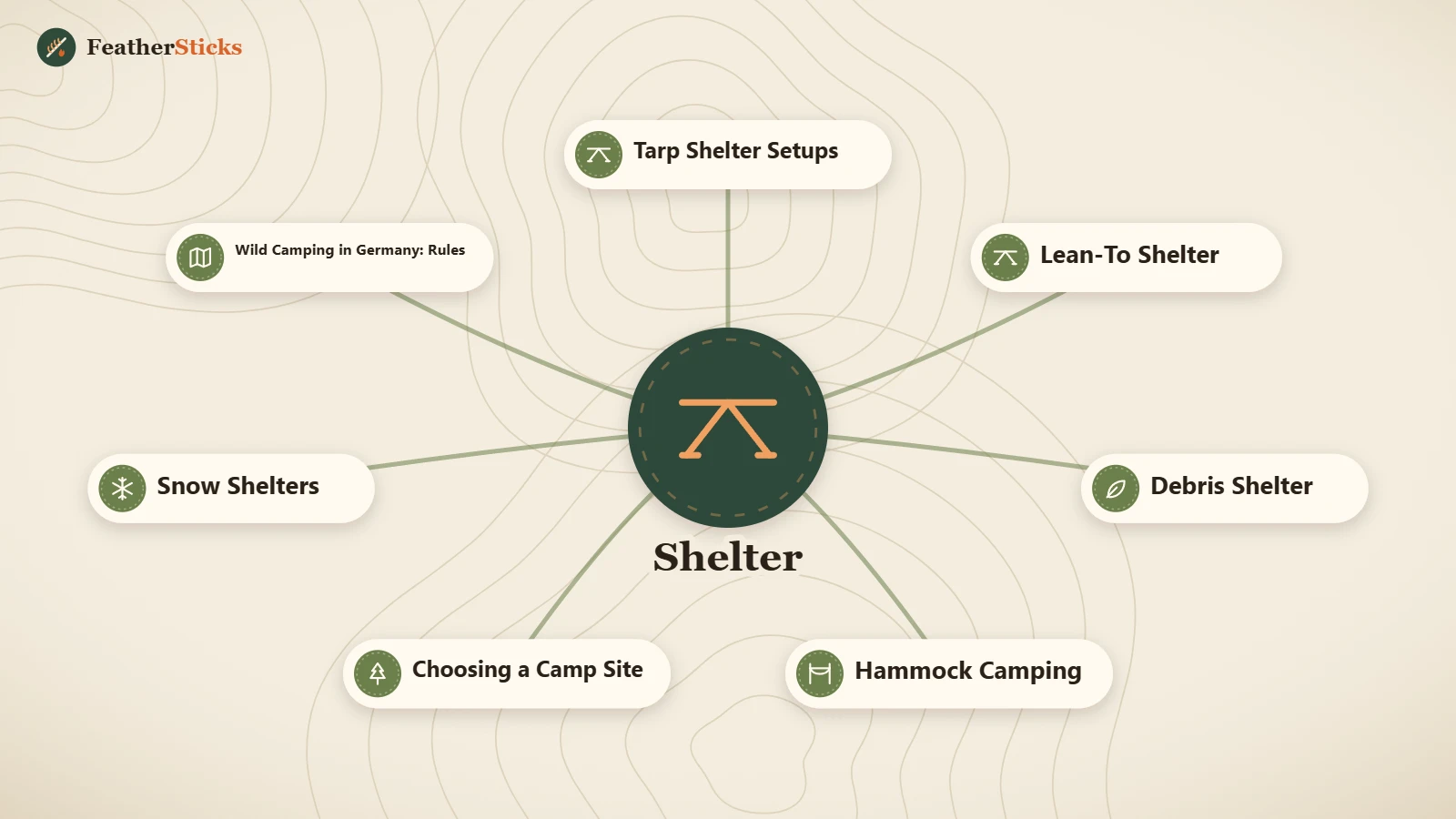
Every shelter starts with the ground it stands on, so begin with choosing a safe camp site: level, well-drained ground, no dead branches overhead and no hollows where cold air and water collect. Then learn the most versatile shelter you can carry, the tarp shelter, with twelve pitches for every weather. A hammock setup lifts you off wet, rocky or sloping ground.
Without gear, nature provides: a lean-to faces a warming fire, a debris shelter insulates with an arm’s length of leaves, and in deep winter a snow shelter keeps you near freezing while it is far colder outside. Before you head out, check where overnight stays are allowed — rules vary by country and, in Germany, by federal state; see wild camping in Germany. The knots you need are in our essential knots guide, and the tarp pitch planner calculates ridge height, cord and stakes for you.
How to set up a tarp shelter: ridgeline, 12 tarp pitches compared, knots for every tie-out, ridge-height geometry and rain tricks that keep you dry.

Build a lean-to shelter that works: frame, thatching, tarp version, orientation to wind and fire, reflector walls, dimensions and safety.

Build a debris shelter step by step: frame, dimensions table, how thick the leaf insulation must be, build time, when to choose it, and safety.

Hang a camping hammock right: the 30° rule, sag and strap heights table, tree protection, tarps over hammocks, underquilts, bugs and the diagonal lay.

How to choose a camp site: the 5 W's (wind, water, wood, widowmakers, wildlife) plus drainage, cold air, insects and permission. With checklist.

How to build a snow shelter safely: quinzhee, snow trench and snow cave, ventilation and CO rules, collapse safety and when not to build one.
Is wild camping legal in Germany? Forest laws, tent vs bivouac, national parks, fire, fines and legal trekking sites – plus Scotland and Scandinavia.
There is no single best shelter. The right choice depends on four things: the weather you expect, the terrain (trees, snow, open ground), what you are carrying, and how much time and daylight you have left. A tarp that is perfect on a showery autumn night in a beech wood is a poor choice on an exposed ridge in a gale, and a debris hut that saves a night without gear is pointless if you carry a sleeping bag and a tarp anyway.
Use the decision path below as a starting point, then read the dedicated guide for the shelter it points you to. Whatever you choose, build it with enough daylight left: the daylight calculator tells you when to stop walking.
Shelter decision tree
Is there deep snow and extreme cold or wind?
Are you carrying a tarp?
Are there suitable trees and is the ground wet, rocky or sloping?
Is strong wind or driving rain forecast?
Each shelter family has a clear profile. Tarps are light and flexible but need skill; tents are simple and warm but heavy and single-purpose; hammocks are comfortable anywhere with trees but need insulation underneath; natural shelters cost nothing to carry but hours to build and need the landowner’s permission.
| Shelter | Weight carried | Setup time | Weather protection | Warmth | Best for |
|---|---|---|---|---|---|
| Tarp | 0.4–1 kg with cord and stakes | 5–20 min | Good to excellent, depending on pitch | Low (depends on sleep system) | Woodland, fire camps, flexible trips |
| Tent | 1–3 kg | 5–15 min | Very good; floor and bug mesh | Moderate | Open terrain, bugs, beginners |
| Hammock + tarp | 1–2 kg incl. underquilt | 10–20 min | Good with the right tarp | Low without underquilt | Wet, rocky or sloping forest ground |
| Natural lean-to | Knife, saw, cord | 2–4 h | Moderate; open side exposed | High with fire and reflector | Cold, dry nights with a fire |
| Debris shelter | Nothing essential | 2–4 h | Good with thick debris | High when small and thick | Emergencies, no gear, no fire |
| Snow shelter | Snow shovel | 1–4 h | Excellent against wind | High (around −5 to 0 °C inside) | Deep snow, extreme cold |
Weights and times are typical ranges. Choose your tarp with our tarp buying guide and plan total pack weight with the kit builder.
Carried shelter vs natural shelter
Carried (tarp, tent, hammock)
Natural (lean-to, debris, snow)
A shelter keeps off rain and wind, but most of your warmth at night comes from the layers between you and the environment — and the most important of them is under you. Cold ground conducts heat away far faster than air, which is why a thin pad on frozen soil feels colder than the air temperature suggests, and why hammock campers need insulation beneath them. Think of the whole system as layers, each with its own job.
Layered shelter and sleep system (top = outside)
Wind makes every layer work harder: 0 °C with a 30 km/h breeze feels far colder, so check the felt temperature with the wind chill calculator before choosing an open shelter. Our sleeping gear guide explains R-values, comfort ratings and how to combine pads. Where fires are allowed, a fire-facing lean-to adds radiant heat — see fire lays for the long fire that suits it, and our campfire safety guide for keeping it under control.
The best shelter fails on the wrong site. Take five minutes to read the ground, the trees and the sky before you unpack anything. The full method is in our guide to choosing a camp site, and the practical layout of fire, kitchen and sleeping area is covered in camp setup.
Shelter site checklist
The same forest asks for different shelters as the year turns. In summer, the main enemies are rain showers, condensation and insects, so an airy tarp or a hammock with a bug net works best. In autumn, long, wet nights and the first frosts make a well-pitched A-frame and a warmer sleep system the priority — and dry leaves make it the best season to practise a debris shelter. Winter brings cold, wind and short days: pitch low, insulate heavily from the ground and, in deep snow, consider a snow shelter. Spring combines cold nights with wet ground, so drainage and ground insulation matter most.
| Season | Main challenge | Good shelter choices | Key tip |
|---|---|---|---|
| Summer | Showers, humidity, insects | Lean-to or raised-wall A-frame, hammock with bug net | Ventilate against condensation; bug net for midges and mosquitoes |
| Autumn | Long wet nights, first frost | A-frame, C-fly, debris shelter practice | Drip lines and tight fabric; pad R 3+ |
| Winter | Cold, wind, short daylight | Low storm pitch, fire-facing lean-to, snow shelter | Pad R 4–5+, start building early, watch for hypothermia |
| Spring | Cold nights, wet ground | A-frame on raised ground, hammock over wet soil | Choose drainage first; avoid nesting-season disturbance |
Across all seasons, the same mistakes cause most bad nights: a site chosen in a hurry, a slack ridgeline, too little insulation underneath and building too late in the day. Avoid those four and almost any shelter will serve you well.
Shelter skills grow in layers. Start in the garden or a local wood with a tarp: rig a ridgeline, pitch an A-frame and a lean-to, and sleep out on a mild night. Learn four knots — a bowline, a trucker’s hitch, a prusik and a taut-line hitch — with the knot finder. Then add storm pitches and a hammock, and finally practise natural shelters and, in winter, snow shelters close to home, where you can bail out if the night goes wrong.
Along the way, pair shelter with the other core skills: fire, water and navigation. Our bushcraft for beginners guide ties them together, and the bushcraft kit list shows what to pack. Respect the forest: take only dead material, never cut live wood, dismantle natural shelters and leave your site as you found it.

The right tarp pitch for your weather, with ridge height, floor space, cord length and stakes.

Tell it the job — ridgeline, tension, loop, joining — and get the right knot with steps.

Which comfort rating and pad R-value you need for the night’s low, your shelter and sleep type.

Feels-like temperature and frostbite risk from air temperature and wind speed.