
Campfire Cooking
Campfire cooking made simple: build a cooking fire, read heat with the hand test, pick the right method and cook safely over coals.
Campfire cooking, cookware and simple outdoor recipes.
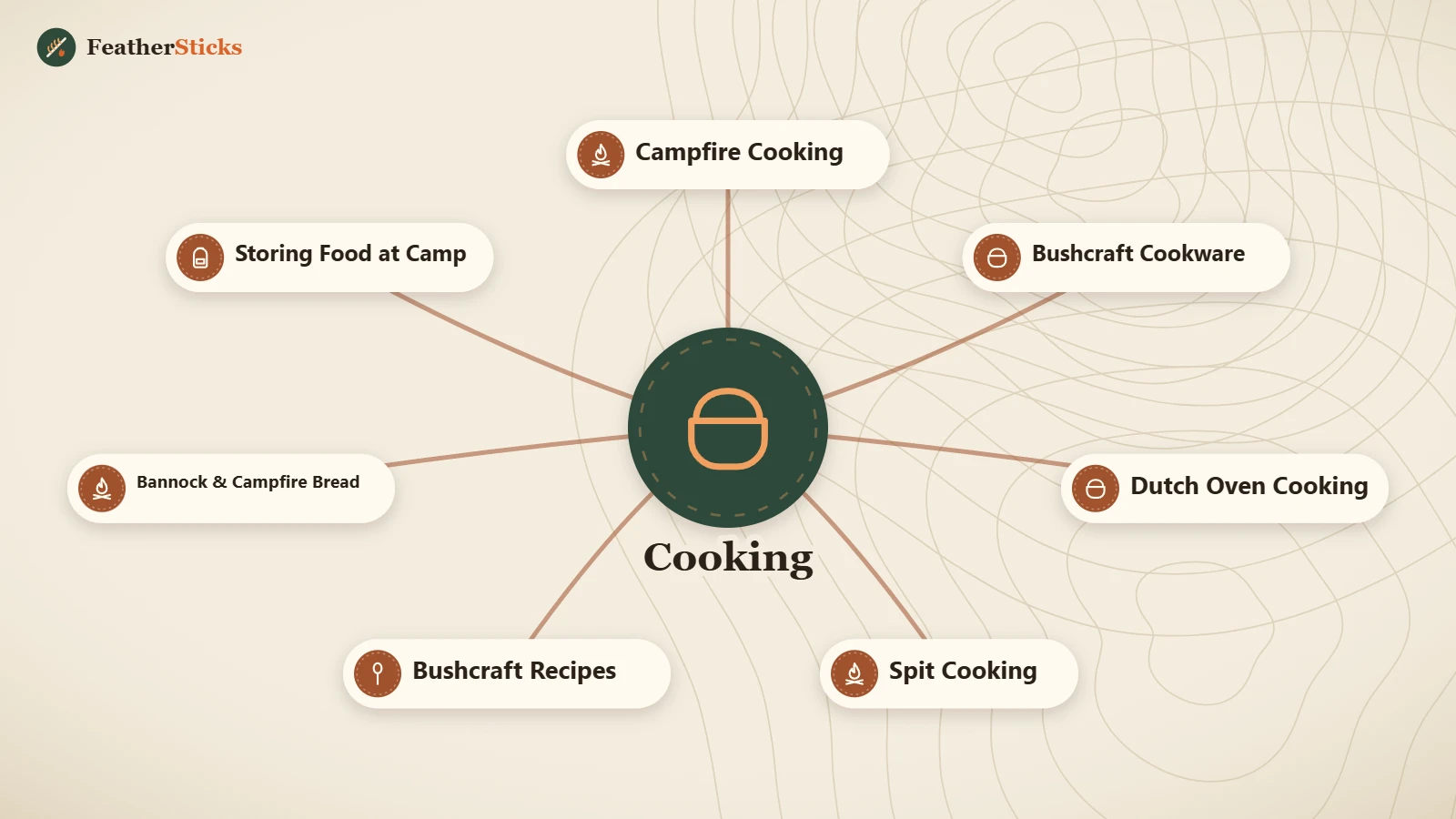
A hot meal after a long day outside is more than fuel: it keeps morale up and your body warm. Bushcraft cooking is mostly about controlling heat, so start with campfire cooking: why coals beat flames, how to read heat zones with your hand and how to set up a pot hanger, grill grate or keyhole fire safely.
Next, choose bushcraft cookware that suits your style, from a light steel billy can to a cast-iron pan. Then explore slower methods: the Dutch oven for stews, bread and cobbler baked under a lid of coals, and spit cooking for roasting meat, fish and vegetables beside the embers. Put it all into practice with our bushcraft recipes – breakfasts, one-pot meals, foil packets and hot drinks – and the classic bannock and twist bread that needs little more than flour, water and fire.
Finally, learn how to store food at camp so it stays safe, cool and out of reach of animals. Food hygiene matters outdoors too: keep hands, water and utensils clean. New to the woods? Our bushcraft guide for beginners puts cooking into context with fire, shelter and water.
Campfire cooking made simple: build a cooking fire, read heat with the hand test, pick the right method and cook safely over coals.
Bushcraft cookware explained: steel vs titanium vs aluminium, pot sizes per person, billy cans, lids, mugs, stoves and cleaning soot in the field.
Dutch oven cooking at camp: size chart, how many coals on top and bottom for each temperature, cooking on campfire embers, seasoning, care and safety.
Spit cooking over a campfire: build a spit from forked sticks, roast beside the coals, turn and time it right and hit safe core temperatures.
Bushcraft recipes for a real fire: breakfasts, one-pot camping meals, foil packets, trout, desserts and hot drinks — with kcal, times and safety tips.
Easy bannock bread recipe for the campfire: ratios per person, home premix, twist bread on a stick, pan bannock, ash cakes, kids tips and fixes.
How to store food while camping: keep it cool without a fridge, pack it smart, protect it from bears and rodents, and leave no trace.
There is no single best way to cook over a fire. Each method suits different food, gear and time. A pot hung over a small fire is the workhorse for water, porridge and stews. A grill grate or pan over coals handles sausages, fish and pancakes. Foil packets and cooking in the embers need no cookware at all, while the Dutch oven turns a fire into an oven. Spit roasting is slow and social, and perfect for a fixed camp.
Start with the method that matches the kit you already carry. If you only have a steel pot, you can already boil, simmer, fry in the lid and bake bannock in a pinch. Add methods as your camp becomes more static and your meals more ambitious.
| Method | Best for | Heat source | Gear needed | Effort |
|---|---|---|---|---|
| Hanging pot | Water, soups, stews, porridge | Small flames or coals | Pot with bail, tripod or crane | Low |
| Pan or grill grate | Eggs, sausages, fish, pancakes | Even bed of coals | Pan or grate, stones or legs | Low |
| Foil packets | Potatoes, vegetables, fish, dessert | Coals at the fire's edge | Heavy-duty foil (pack it out) | Very low |
| In the embers | Potatoes, ash cakes, onions | Hot ash and embers | None, a stick to turn | Very low |
| Dutch oven | Bread, stews, roasts, cobbler | Coals below and on the lid | Cast-iron camp oven, lid lifter | Medium |
| Spit or plank | Whole chicken, kebabs, fish | Coals beside the food | Two forked sticks, green spit | High |
Which method should I use tonight?
Are you moving camp every day and carrying one pot?
Do you want to bake bread or cook a stew for 2–3 hours?
Is fire allowed and the danger level low?
The most common mistake in campfire cooking is cooking over flames. Flames are uneven, blacken pots with soot and burn the outside of food while the inside stays raw. Glowing coals radiate steady heat that you can control by distance and by how many coals you rake under the pot. Plan to light your fire 30–45 minutes before you want to cook, using hardwoods where legal and available.
A classic cooking setup has two zones: a small feeding fire at the back that keeps producing fresh coals, and a flat coal bed at the front for cooking. The keyhole fire is built exactly this way. The fire lay picker suggests the right structure for your purpose and weather, and our fire lays guide shows how to build it.
| Seconds you can hold your hand ~10 cm above | Heat level | Approx. temperature | Good for |
|---|---|---|---|
| 2 s | High | 230 °C+ (450 °F+) | Searing, boiling water fast |
| 3–4 s | Medium-high | 200–230 °C | Steaks, sausages, frying |
| 5–6 s | Medium | 175–200 °C | Fish, pancakes, bannock in a pan |
| 7–8 s | Low | 150–175 °C | Simmering stews, slow toasting |
| 10 s+ | Warm | below 150 °C | Keeping food warm, proofing dough |
Hand-test values are traditional rules of thumb and vary with wind, wood and your skin; use them to compare, not to measure. Details in campfire cooking.
Anatomy of a cooking fire (top to bottom)
Outdoor days burn far more energy than office days. Depending on body size, load, terrain and cold, many adults need somewhere around 2,500–4,000 kcal a day on the trail, and more in winter. Instead of guessing, use the trail food and calorie planner: it estimates your daily need from your basal metabolic rate, activity and night temperature, converts it into grams of food and proposes a sample day menu.
Weight is driven by calorie density. Fresh food averages roughly 1–2.5 kcal per gram, typical trail food about 4 kcal/g and an ultralight menu built on nuts, oil and chocolate around 5 kcal/g. On a weekend trip, fresh ingredients are fine; from three days onwards, dry and shelf-stable foods save kilograms. Our recipes list calories per serving so you can build your days from them.
Do not forget water. Pasta, rice and dehydrated meals need 0.3–0.6 L per portion, plus hot drinks. Plan it with the water needs calculator and check boiling time and fuel with the boiling point calculator. Safe drinking water is covered in boiling water.
Time matters as much as calories. In late autumn and winter, daylight is short and a fire needs half an hour before it gives good coals, so plan quick dinners for the first night and slow Dutch oven dishes for rest days. Cook one hot meal a day at minimum in cold weather, and keep a no-cook lunch ready for rain, fire bans or late arrivals.
Calorie density of typical camp foods (kcal per 100 g, approx.)
From plan to plate
A good cooking kit is small. One stainless steel pot with a lid and bail handle, a mug, a spoon and a knife cover most meals. Everything else depends on group size, trip style and whether you cook on a fire or a stove. The cookware guide compares steel, titanium, aluminium and cast iron, and the Kit Builder adds the right items to your full packing list. For the rest of your gear see the bushcraft kit list.
Core cooking kit
Open fire vs camping stove
Open fire
Stove
Daily calories, food weight and macros for your trip, plus a sample day menu.
Boiling point at your altitude, safe boil time and how much gas or wood you need.
Pick purpose, weather and ground — get the best fire lay and how to build it.